
Some artists don't just make paintings, they remake the world through them.
This is a guide to the artists I find most inspiring: painters who pushed the boundaries of color, form, and composition, and who drew their creative power from the most personal of places – their own lives, landscapes, and inner worlds. These are not artists who followed the rules. They bent them, broke them, and in doing so, left behind bodies of work that continue to teach, move, and challenge us.
What draws me to these painters is not just what they made, but how they made it. They looked at the people around them, the places they called home, the pain and joy they carried and they turned all of it into something lasting. Studying their work is studying a way of seeing, and there is no better education for any artist or art lover.
Two artists sit especially close to my heart: Frida Kahlo and Georgia O'Keeffe. I've had the privilege of visiting both – standing in Kahlo's cobalt-blue Casa Azul in Mexico City, and walking through O'Keeffe's spare, luminous world in Santa Fe. To see where an artist lived and worked is to understand their paintings in a way no book can fully capture. I hope to make many more such pilgrimages.
This guide is a living document of that journey – an invitation to look closely, think deeply, and find your own inspiration in the artists who found theirs everywhere.
Let their work speak.
Masterpieces
Use the arrows or keyboard ← → to move through the deck. Each card reveals their masterpieces and technique.


Painter's Technique: Frida Kahlo
She painted using bright, vibrant colors heavily influenced by indigenous Mexican culture, often painting precise, detailed strokes on canvas or masonite.
Artist Index
A reference table of artists above. Click any card above to explore their work in depth.
| # | Artist | Years | Era | Nationality | Style | Famous Works |
|---|---|---|---|---|---|---|
| 01 | Frida Kahlo | 1907 – 1954 | Surrealism / Magical Realism Mexico, early to mid-20th century. Art characterized by dreamlike imagery, symbolic elements, and a blend of reality and fantasy, often deeply personal. | Mexican | Surrealism, Naïve Art | · Frida Kahlo Museum, Mexico City (1904)· Self-Portrait with Monkey (1938)· Viva la Vida (1954) |
| 02 | Georgia O'Keeffe | 1887 – 1986 | Modernism United States, early to mid-20th century. A movement that broke from traditional representation to explore abstract forms, bold colors, and the emotional essence of the natural world. | American | Precisionism, Modernism | · Taos Pueblo (1929)· Canyon with Crows (1917)· Lake George Reflection (1921) |
| 03 | Katsushika Hokusai | 1760 – 1849 | Edo Period (Ukiyo-e) Japan, 1603–1867. A flourishing of urban culture where art focused on the 'floating world'—the theaters, tea houses, and natural landscapes enjoyed by the rising merchant class. | Japanese | Ukiyo-e, Landscape | · Fine Wind, Clear Weather (c. 1760-1849)· The Great Wave off Kanagawa (c. 1760–1849)· Land Surveyors in the Edo Period (1848) |
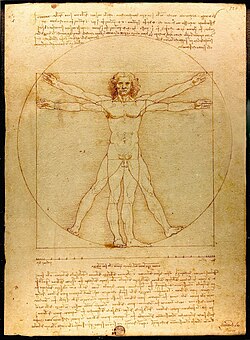
| 04 | Leonardo da Vinci | 1452 – 1519 | High Renaissance Italy, 1490–1527. The peak of Renaissance idealism: harmony, proportion, and classical beauty dominate. Art serves religion, humanism, and the glorification of the human form. | Italian | Classical Realism, Sfumato | · Mona Lisa (c. 1503)· The Last Supper (c. 1498)· Vitruvian Man (c. 1490) |
| 05 | Vincent van Gogh | 1853 – 1890 | Post-Impressionism Europe, 1886–1910. Artists pushed beyond capturing fleeting light to explore emotional and symbolic meaning through bold color, expressive brushwork, and abstract structure. | Dutch | Expressive Brushwork, Color Emotion | · The Starry Night (1889)· Sunflowers (1888)· The Bedroom in Arles (1888) |
| 06 | Claude Monet | 1840 – 1926 | Impressionism France, 1860s–1880s. A radical break from academic painting, artists worked outdoors to capture the transient effects of light and atmosphere using loose, broken brushstrokes. | French | Broken Color, Optical Mixing | · Water Lilies (1906)· Impression, Sunrise (1872)· Haystacks (1890–91) |
| 07 | Pablo Picasso | 1881 – 1973 | Cubism / Modern Art Europe, 1907–1970s. Form is fragmented and reassembled from multiple viewpoints simultaneously. The first major movement to break entirely with Western pictorial tradition since the Renaissance. | Spanish | Cubism, Analytical Deconstruction | · Les Demoiselles d'Avignon (1907)· Guernica (1937)· Girl Before a Mirror (1932) |
| 08 | Johannes Vermeer | 1632 – 1675 | Dutch Golden Age Netherlands, 1588–1672. A flourishing of secular, merchant-class art: portraits, landscapes, still lifes, and domestic interiors painted with extraordinary realism and craft. | Dutch | Intimate Realism, Light Opticism | · Girl with a Pearl Earring (c. 1665)· The Milkmaid (c. 1657–1658)· The Little Street (c. 1658) |
| 09 | J.M.W. Turner | 1775 – 1851 | Romanticism Europe, 1780–1850. A reaction against rationalism and industrialisation, artists pursued the sublime, the wild, the emotional, and the awe-inspiring power of nature. | British | Atmospheric Abstraction, Luminism | · The Fighting Temeraire (1839)· Rain, Steam and Speed (1844)· The Golden Bough (c. 1834) |